

Categories of Antimicrobial / Antiparasitic Herbs
1. Bitter Herbs
Traditionally used to discourage parasites by creating an unfavorable gut environment.
Wormwood (Artemisia absinthium)
Black walnut hull (Juglans nigra)
Goldenseal (Hydrastis canadensis)
Gentian root (Gentiana lutea)
Barberry (Berberis spp.)
⚠️ Some can be toxic in high doses or with long-term use.
2. Aromatic / Essential Oil–Rich Herbs
Contain volatile oils with antimicrobial activity.
Oregano (Origanum vulgare)
Thyme (Thymus vulgaris)
Clove (Syzygium aromaticum)
Cinnamon (Cinnamomum spp.)
Sage (Salvia officinalis)
⚠️ Essential oils are very potent and should not be used internally without expert guidance.
3. Sulfur-Containing Herbs & Foods
Traditionally used against bacteria, fungi, and parasites.
Garlic (Allium sativum)
Onion (Allium cepa)
Asafoetida (Ferula assa-foetida)
4. Tannin-Rich (Astringent) Herbs
May help inhibit parasite attachment and reproduction.
Pomegranate peel (Punica granatum)
Oak bark (Quercus spp.)
Witch hazel (Hamamelis virginiana)
Raspberry leaf (Rubus idaeus)
5. Alkaloid-Containing Herbs
Strong antimicrobial action but often higher risk.
Goldenseal (Hydrastis canadensis)
Berberine-containing plants:
Barberry
Oregon grape root
Tree turmeric (Berberis aristata)
⚠️ Can affect liver enzymes and medications.
6. Resinous & Latex-Producing Plants
Historically used in parasite protocols.
Myrrh (Commiphora myrrha)
Frankincense (Boswellia spp.)
Papaya seeds (Carica papaya)
Neem (Azadirachta indica)
7. Traditional Antiparasitic Herbs (Ethnobotanical Use)
Used in Ayurveda, Traditional Chinese Medicine, African, and Latin American systems.
Neem
Epazote (Dysphania ambrosioides)
Vidanga (Embelia ribes)
Kalonji / Black seed (Nigella sativa)
Areca nut (Areca catechu) ⚠️ high toxicity risk
8. Mucilaginous & Bulking Herbs (Supportive, Not Killing)
Often included to help elimination rather than kill parasites.
Psyllium husk
Flaxseed
Slippery elm
9. Anti-Fungal / Broad-Spectrum Herbs
Used when parasites are suspected alongside yeast or bacterial imbalance.
Pau d’arco (Tabebuia spp.)
Caprylic acid (from coconut)
Olive leaf (Olea europaea)
Lapacho
⚠️ Important Safety Notes
“Parasite cleanses” can cause side effects: nausea, electrolyte imbalance, liver stress.
Many herbs interact with medications (especially blood pressure meds, antidepressants, antiparasitics).
Symptoms attributed to “parasites” are often due to gut dysbiosis, IBS, food intolerance, or stress.
Clinical diagnosis (stool tests, PCR, antigen testing) is the only reliable way to confirm parasites.
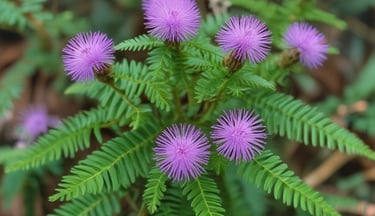
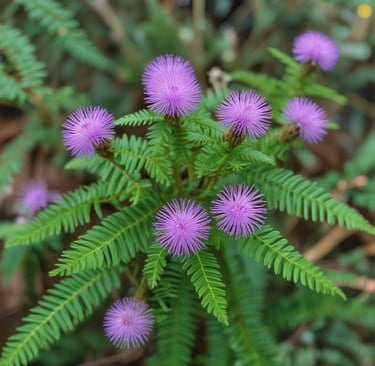
Mimosa Pudica
Mimosa pudica—often called the sensitive plant, touch-me-not, or shame plant—is a fascinating species known for both its behavior and its traditional uses.
What it does
Rapid leaf movement: When touched, shaken, heated, or exposed to strong light, its small leaflets fold inward and droop within seconds. This is a defensive response (called thigmonasty) that likely helps deter herbivores or reduce damage.
Night movement: The leaves also close at night and reopen during the day.
Flowers: It produces small, round, fluffy pink-purple flowers made up of many tiny florets.
Growth habit: It’s a low-growing, spreading plant with thorny stems.
The movement is caused by changes in water pressure (turgor pressure) in specialized cells at the base of the leaves—not muscles or nerves.
Where it comes from
Native range: Tropical Central and South America
Current distribution: Now widespread in tropical and subtropical regions worldwide (India, Southeast Asia, Africa, Australia, parts of the southern US)
Habitat: Roadsides, grasslands, gardens, disturbed soils
In many places, it’s considered invasive because it spreads easily and competes with native plants
.
Traditional and modern uses
Mimosa pudica has a long history in traditional medicine, especially in Ayurveda, Traditional Chinese Medicine, and folk medicine.
Common traditional uses include:
Digestive issues (diarrhea, dysentery)
Wound healing and minor skin conditions
Anti-inflammatory and antimicrobial purposes
Anxiety and sleep support (in some traditions)
Intestinal parasite treatments (especially seed preparations)
Modern research is exploring its:
Antioxidant properties
Antimicrobial effects
Possible anti-inflammatory and antidiabetic activity
That said, many of these uses are not yet strongly supported by large clinical trials.
When not to use it (important)
You should avoid or be cautious with Mimosa pudica in the following situations:
❌ Pregnancy and breastfeeding
There is insufficient safety data, and traditional sources often advise against its use due to potential uterine or hormonal effects.
❌ Autoimmune conditions
It may stimulate immune activity, which could worsen autoimmune diseases.
❌ Before surgery
It may affect blood sugar or blood clotting, so it’s often advised to stop use at least 1–2 weeks before surgery.
❌ Children
Especially internal use: safety data is limited.
❌ Long-term or high-dose use
Seeds in particular can be toxic in large amounts.
Overuse may cause gastrointestinal irritation, nausea, or neurological symptoms.
⚠️ Medication interactions
Use caution if taking:
Blood sugar–lowering medications
Blood thinners
Immunosuppressive drugs
Bottom line
Mimosa pudica is:
🌿 Botanically fascinating
🌍 Widely distributed beyond its native range
🩺 Traditionally used but not risk-free